The Big Picture
Much of what we value in life is found in our social relationships. We tell stories that serve to both construct and remember an often idealized version of reality and protect those ideals from the outside world. Yet, we simultaneously search for greater understanding of risks and uncertainties in our social systems while seeking solutions to our most prescient problems.
Historically, the human race has found security and comfort in small groups, especially in immediate and extended families, as well as tribal units. Beyond that, cognitive limits and emotional constraints often result in diminished safety and effectiveness in groups (see the “Dunbar number”). In more recent years, cities have become more populous and dense centers for social life, while incurring costs of greater per capita crime (ref. the book Scale by Geoffrey West).
My work here is to better understand the individual-group nexus in terms of dynamical processes that can be modeled for insights into complex (sometimes chaotic) interactions. Some examples follow.
Behavior changes dramatically when individuals come together as groups.
- Decision-Making & Polarisation: Groups often experience group polarization, where collective decisions become more extreme than the initial inclinations of individual members. While they can produce more creative solutions to complex problems, they are also prone to “groupthink“.
- Conformity and Social Influence: Individuals in groups frequently adjust their behavior to align with the group’s norms, often suppressing personal opinions to fit in.
- Performance on Tasks: Groups outperform individuals on complex tasks, while individuals are often more efficient at simpler, routine tasks.
- Information Pooling: Groups leverage diverse experiences and perspectives, leading to potentially more effective and thoroughly vetted decisions.
- Social Identity & Bias: Being part of a group can increase in-group favoritism, as people may treat their own group members differently than outsiders.
- Accountability & Security: Groups offer a sense of safety and support, but can also lead to diffusion of responsibility.
The mechanisms that produce these changes are numerous and intertwined. Moreover, group behavior evolves, with future behavior moderated by current and past behaviors. Thus, causality is complex and can’t adequately be described as a “system”. Rather, group behavior is more akin to a Markov chain and described as a sequence of states. Yet, such sequences don’t allow for recursive processes, shared cognition, or collective emotion. Consequently, a more dynamic analysis is needed and developed in my research as Catenated Behavior. This incorporates the group dynamics described above by allowing for cross-communication of intents, emotions, and actions, along with cognitive limitations of uncertainty, including errors, bias, beliefs, and heuristics.
Catenated Sequences versus Markov Chains
In this work, a catenated sequence has a wholistic component that makes similar behavioral sequences mutually influential in real time. It also borrows information from its environment and can carry residues from prior operations. Markov chains are state machines with future states only a consequence of current states.
Uncertainty and Heuristics
Decisions are frequently guided by heuristics that can evolve over time with new experiences. These are modeled stochastically and vary by agent.
Confidence is one predictor of social decisions in complex systems. People often rely on their prior (sometimes imagined) beliefs in uncertain situations and have simplistic explanations for what they experience, which mediates their choices. Our approach to modeling this process within a complex networks is to assign the quantitative metric of confidence, to explore how “false confidence” (FC) creates errors in decision-making.

“False confidence” can be treated quantitatively as the difference between perceived and objective information. The chart above goes one step further to treat each as an evolving probability of non-randomness.
Embodiment and Shared Cognition
Embodied and shared cognition underlies the premise that human intelligence is conditioned and mediated by the physical body as it interacts in its environment. It is largely what makes us situationally distinct individuals. (See Varela, F.J. Thompson, E. and Rosch, E. 2016, The Embodied Mind, for an introduction.)
Modeling and Simulation
I primarily use Python as a simulation language but I am also exploring the use of “Utopia” software which provides the tools to conveniently implement computer models, perform simulation runs, and evaluate the resulting data. More details to follow.
Documentary Photography and Illustration
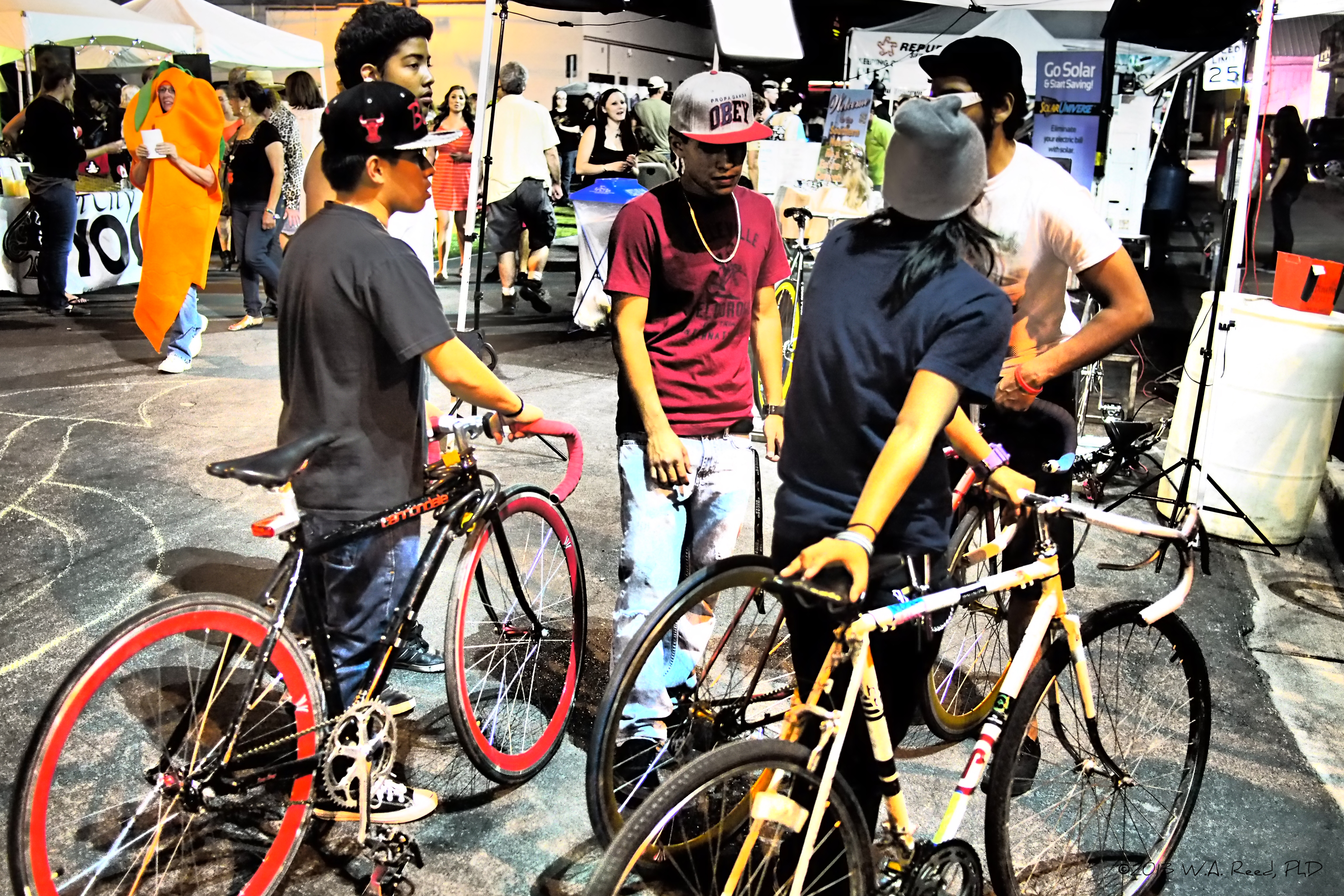
The photos and illustrations below represent stories of unplanned interaction between people that form catenated sequences of behavior. These short behavioral ad hoc sequences are influenced (and influence) the surrounding environment.